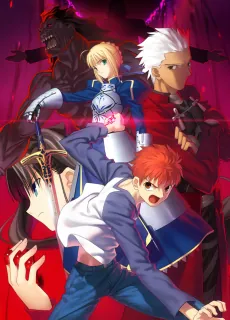
A kid with no business in a war summons a legendary knight, and from that moment the show knows exactly how to make you care about people fighting to the death for a wish. The combat system turns every duel into a puzzle where you're learning the rules alongside Shirou, never sure if his next move is genius or desperation. Saber exists as a character, not a servant archetype, and watching her and Shirou orbit each other while the Holy Grail War collapses around them is why people still argue about this show years later. The 2006 animation holds up because it treats every spell cast like it matters. Fair warning: there's enough talking to test your patience, and some of what the show tries doesn't land. Watch it if you want to understand why Fate became what it became.
Shirou Emiya lost his parents in a great fire and was taken in by Kiritsugu Emiya, a magus who taught him a little magecraft and the ideal of justice before dying himself. Years later, Shirou sees two Servants fighting at his school one night and is gravely wounded. When the attacker returns, he summons a Servant of his own, the knight Saber. The pair are now drawn into the Fifth Holy Grail War in Fuyuki City, where seven Masters and their Servants fight for a Grail said to grant any wish. Shirou struggles to tell a hero from a killer as his ideals collide with a harsh reality.
WHERE TO WATCH
Streaming Fate/stay night legally, as of the last catalog refresh. Availability changes by region.
NetflixHuluHIDIVETubi TV