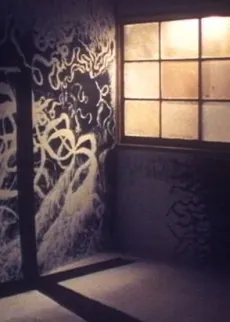
A painter's hand moves across a dormitory wall one day at a time, and what emerges from seven minutes of accumulated brushstrokes is not a story but a ritual. Bach's organ music doesn't accompany the images, it breathes with them, each note arriving exactly where the paint already knows to go. Watch this if you've ever felt more moved by color shifting in real time than by anything a plot could offer.
Ishida spends a full year in a Tokyo dormitory, painting on the wall of the room each day and filming the result using only the light that comes in through the window. The short film strings together the few seconds of footage captured on each of those days, running about seven minutes in total, with organ music by J.S. Bach playing throughout.