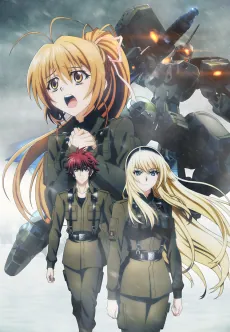
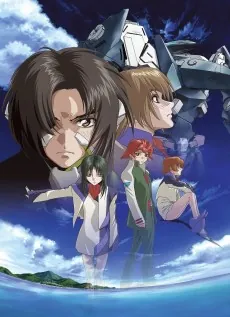
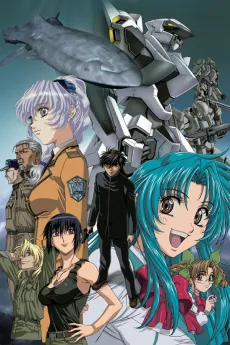
The first half tricks you into thinking this is a mecha show about kids fighting aliens, then it pulls the floor out and becomes a character drama about people trying to live normal lives in a world that won't let them. By episode six you realize the real war isn't against invaders, it's against the weight of growing up when the sky never stops burning. The tonal whiplash will destroy some viewers. For the ones it doesn't, there's nothing else quite like watching teenagers argue about homework between deployment orders, or seeing a romance develop in the margins of an endless conflict.
In 1945, as the Pacific War draws to a close, alien invaders fill Earth's skies, and for the first time the world's cultures unite under a single banner against them. More than fifty years later the war still rages, and after countless deaths the Japanese military has come to depend on the young. Atsushi Hayami and his high school class form Unit 5121, fighting with HWT humanoid combat machines and the destructive PBE bomb. The series is a mecha drama that pairs frontline sci-fi warfare with slice-of-life school days and romance.