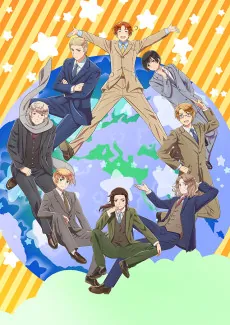
It drops a five-minute hit of nation-shaped chaos into your day and asks nothing of you afterward. This is Hetalia running its oldest trick with a fresh coat: World Stars looks noticeably sharper than World Twinkle, which mostly means the mugging, the eyebrow acting and the reaction faces land harder than they used to. Funimation's dub cast is the real draw here, a group that has been voicing these personified nations long enough to know exactly where the joke sits in a line, and they hit it every time. And no, it does not evolve. Twelve shorts of the same bickering, the same running gags, the same boss-tormented weirdos, and that predictability is the point for anyone who has been here since Axis Powers. Binge it in an hour and you will still catch yourself quoting one bit for a week.
Personified nations walk among us as eccentric individuals. They can vanish for a few days or for centuries, then turn up again on someone's whim with a new name and a new personality. Strange as they are, their bosses loosely accept them and put them to use. In World Stars, Greece is still stuck in financial trouble, so the other nations brainstorm ways to get his economy moving again. That effort sets off the Industrial Revolution, and America pulls far ahead of everyone in technology and economic power. Worried that his global standing is slipping, England pleads with the others for ideas to repair his country's image. Meanwhile, smaller nations are keen to stand out now that they are independent. Czechoslovakia has split into the Czech Republic and Slovakia, and the two are left at odds with plenty of spare time on their hands. The result is a comedy about nations behaving like people.
WHERE TO WATCH
Streaming Hetalia: World Stars legally, as of the last catalog refresh. Availability changes by region.
CrunchyrollYouTube