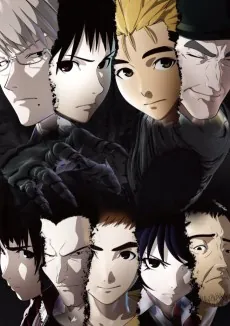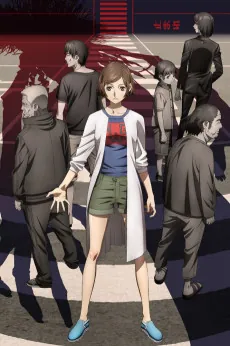
A kidnapping gives you thirty minutes to save your family. Your grandfather reveals a stone that stops time entirely. What should be a rescue becomes a trap you don't understand yet, one where the frozen world has rules that don't make sense and things that move when they shouldn't. The pacing is slow enough to make you feel the weight of every decision. By episode three you realize the premise was never about the rescue, it's about what wants to keep you in the Stasis, and why your family was chosen. Kokkoku doesn't explain itself until it's too late to unsee what it's really asking.
When a mysterious religious group kidnaps Juri Yukawa's brother and nephew, her struggling family has only 30 minutes to hand over five million yen. With no way to raise the money, Juri's grandfather reveals a secret passed down in the family: a strange stone that, once given blood, carries its users into Stasis, a version of their world where time stands still for everyone else. Juri, her father and her grandfather rush to the kidnappers' hideout, but they soon find they are not the only ones who can move in the frozen world. Another group attacks them there, and grotesque creatures lurk in Stasis, including a monstrous giant called the Herald whose purpose is unclear. Drawn from a manga by Seita Horio, the show is a supernatural psychological thriller built around a rescue gone wrong and the question of whether the family can get back to normal life.
WHERE TO WATCH
Streaming KOKKOKU legally, as of the last catalog refresh. Availability changes by region.
Amazon Prime Video