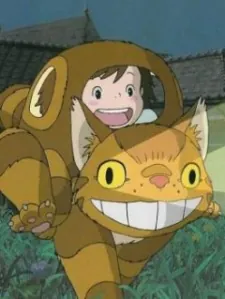
This is what Studio Ghibli looks like when nobody is watching except the people who need it most. A short film that exists only behind museum walls, screened for pilgrims willing to travel to Japan, it moves at the speed of a child's wonder, not a studio's ambition. Mei rides a kitten-shaped bus into a forest of spirits at midnight, and the animation breathes in ways that feel illegal to witness in 2024, each frame hand-drawn like someone was trying to paint a memory instead of deliver a story. The inaccessibility is real, and it makes the thing hurt. You cannot have this except by pilgrimage or theft, which is exactly how Ghibli intended it.
On a gusty day, Mei is about to enjoy a caramel when a sudden whirlwind starts chasing her, and it turns out to be a baby cat bus, small enough to kick up only little dust devils. A shared caramel becomes the beginning of an unlikely friendship. That night, the kitten bus returns and invites Mei to ride inside him. Together they leap into the sky and fly toward a nighttime forest full of spirits, where cat buses large and small have gathered. A short fantasy adventure made as a mini-sequel to My Neighbor Totoro, it was screened only at the Ghibli Museum in Mitaka.