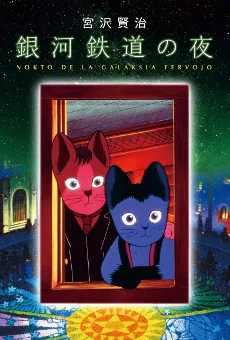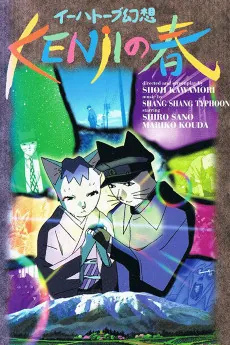
The film doesn't just tell Miyazawa's life, it lives inside his head, using animals and Ihatov as the landscape of a man trying to turn suffering into art. Every frame feels like it's drawn from his own writing, which means you're not watching a biography so much as experiencing how a poet sees the world. A ninety-minute reminder that the most beautiful work often comes from the people most broken by living.
Kenji Miyazawa, the celebrated modern Japanese poet, is the subject of this one-off special, a biographical sketch told in a highly stylized, intense manner. Miyazawa often made animals the central figures of his stories and poems, and director Shoji Kawamori borrows that approach, rebuilding the writer's imagined land of Ihatov as the setting for scenes from his life. The film blurs the line between Miyazawa's life and his literary vision, shaping a moving drama in tribute to one of Japan's most admired authors.