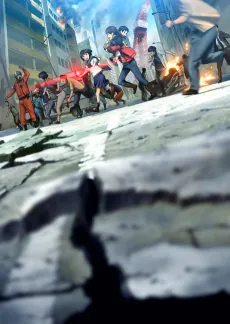
A catastrophe doesn't care about your summer plans. Mirai and Yuuki are trapped in Tokyo as everything collapses around them, and the show refuses to turn that into spectacle or heroics, it stays inside their heads, watching a girl become someone else in eleven days. The ending isn't a twist that reframes everything. It's a quiet, permanent thing that changes what the entire journey meant.
At the start of summer vacation, middle schooler Mirai Onozawa, unhappy with her family life, grudgingly takes her younger brother Yuuki to a robot exhibition on Odaiba, a man-made island in Tokyo. While they are inside, a magnitude 8.0 earthquake rises from an ocean trench and tears through the Kanto region. Tokyo Tower and Rainbow Bridge collapse, and the face of the city changes in a moment. Afterward the siblings meet Mari Kusakabe, a motorcycle delivery rider and single mother who chooses to help them. Together they begin a long, difficult trek across the ruined city toward the children's home in Setagaya, hoping to find their families again. The drama grew out of a projection that Tokyo faces a strong chance of a major quake within decades, and it imagines what such a disaster would bring.