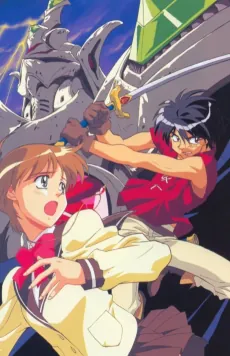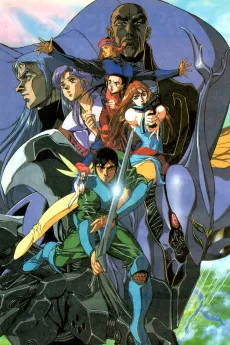
Show gets pulled into a world where magic and machines are the same thing, and the show never pretends they're different. The Aura Battlers look nothing like your typical mecha because they're built from Byston Well's logic, not ours, all chitinous curves and organic geometry that moves like nothing else on screen. Tomino refuses to explain the worldbuilding cleanly, which means you're discovering Byston Well at the same pace Show is, disoriented and off-balance. The character drama is thin and stilted, a real weakness that never resolves. But that disconnection, between a kid who doesn't know how to talk to anyone and a world that operates on rules he can't articulate, becomes the entire point of watching him survive it.
Shou Zama is an ordinary 18-year-old from Tokyo until an accident sends him into Byston Well, a medieval fantasy realm. There he falls under the command of the ambitious lord Drake Luft, who wants to widen his power. Visitors from Upper Earth like Shou carry strong aura power, so Drake orders them to pilot Aura Battlers, insect-like machines that blend Byston Well magic with technology from Earth. The designer of these machines, Shot Weapon, also came from Upper Earth. Shou's loyalties change when he meets Marvel Frozen, a young woman who has turned against Drake. Once he sees what the lord truly intends, Shou joins the resistance led by Neal Given. Riml, Drake's own daughter and the woman Neal secretly loves, assists them in the hope of breaking free of her father. Together they fight to stop Drake from seizing control of Byston Well. The show combines fantasy adventure with mecha battles.
WHERE TO WATCH
Streaming Aura Battler Dunbine legally, as of the last catalog refresh. Availability changes by region.
HIDIVE