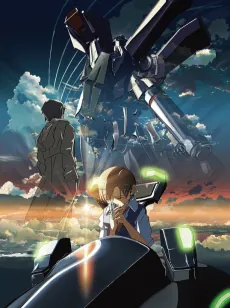
Arato believes in Lacia's smile when nothing else in the world does, and the show builds its entire weight on that one choice. The production collapsed mid-airing and it shows, but what made it to screen is a sci-fi that refuses the comfortable answer about whether androids can matter. By the end you are not watching a love story or an action show, you are watching someone defend his faith in another being when every system in the world is designed to prove him wrong.
In 2105, humanoid androids called hIE fill countless roles in Japanese society, serving the public and individual owners alike. Most people regard them as mere objects, and Arato's friends Kenko and Ryou openly despise them. Arato is different: the kind high school student sympathizes with hIE, though he cannot afford one of his own. One night, strange falling cherry blossoms send hIE and machines out of control, and Arato is attacked by a hacked hIE. He is rescued by Lacia, a remarkable hIE carrying a weaponized coffin and one of five advanced units that escaped the MemeFrame Corporation. She proposes a deal: she will save him if he registers as her owner and takes responsibility for what she does. Arato agrees and lets her live in his home, while she warns him that she has no soul. Each of the five units has its own goals and battles the others for their abilities, and Arato must work out what the bond between people and machines should become. The story blends action, drama, romance and science fiction across 24 episodes.
WHERE TO WATCH
Streaming BEATLESS legally, as of the last catalog refresh. Availability changes by region.
Amazon Prime Video