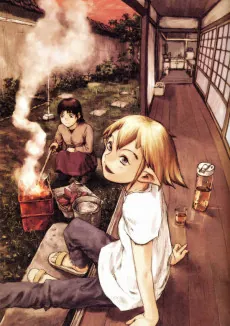
Two sisters with nothing left decide that's not the same as having nothing to lose. Kyo works herself raw to keep Asu in school, but the show never treats their poverty as tragedy, it treats it as the condition they're working inside, the way you'd work inside a season. Watch them laugh at each other over rationed food, watch Kyo's face when she realizes Asu believes in her, and you'll understand that this isn't about overcoming hardship so much as it's about two people choosing to build something real inside it.
Two sisters, Kyou and Asu Yamada, are left to fend for themselves after their mother dies of an illness and their debt-ridden father disappears. Fifteen-year-old Kyou keeps up with her studies while taking temporary jobs such as delivering newspapers and tutoring to keep them afloat. Nine-year-old Asu runs the household, cooking meals and managing their money to help her older sister. They share a small room in an old apartment, and life is hard and sometimes painful, but they meet each day with enthusiasm and pride. Kind neighbors watch over them, among them the novelist Saegusa and the woman at the public bath. Whatever quarrels or trials come their way, the bond between the two sisters holds. The show blends comedy, drama and slice of life.