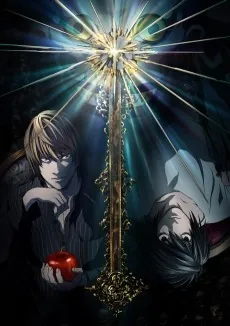
Light thinks he's writing a utopia with a pen. What he's actually doing is writing his own descent into madness, one name at a time. The first half of this show moves like a chess match where you're watching both players simultaneously lose their minds, and the tension never breaks because Light's logic is airtight until it isn't. By the time you realize the notebook wasn't the curse, Light was, you're already too invested to look away. The second half stumbles when it trades psychological warfare for plot mechanics, but the damage is already done. You've spent thirteen episodes watching a genius convince himself he's a god, and you believed him too.
A supernatural notebook falls into the hands of Light Yagami, a brilliant high school student who finds the world rotten. The Death Note belongs to Ryuk, a bored god of death who drops it on Earth for his own entertainment. Its rule is simple: picture a person while writing their name, and that person dies. Light sees himself as a savior, convinced he can make the world better by wiping out its criminals. Soon known to the public as Kira, he draws the attention of the police and of L, a mysterious master detective determined to stop him. Their pursuit becomes a battle of wits between two equally sharp minds, and Light works to keep anyone from identifying or interfering with him. The result is a psychological thriller about power and the certainty of someone who believes he alone can judge who deserves to live.
WHERE TO WATCH
Streaming Death Note legally, as of the last catalog refresh. Availability changes by region.
CrunchyrollNetflixHuluAmazon Prime VideoTubi TVHooplaYouTube