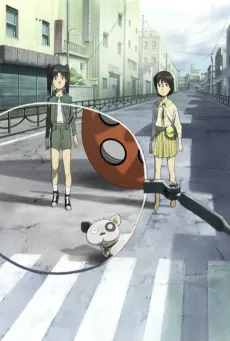
Makoto's point system crumbles the second Erio enters his life, and the show knows exactly how funny that is. SHAFT's visual language, every frame a small act of rebellion against boring backgrounds, every cut a joke before the dialogue even lands, makes the mundane absurd without trying. You watch a girl roll through the city claiming alien origins, and by episode three you stop asking if the plot goes anywhere because you're too busy noticing how the color palette shifts when she's on screen.
Makoto Niwa moves to a new city to live with his aunt Meme after his parents are sent to work overseas, and he welcomes the chance at an ideal teenage life. He scores his experiences with positive and negative points and totals them to grade his youth. Then he learns Meme has a daughter he never knew about: his cousin Erio, a girl his own age who skips school, wraps herself in a futon and insists she is an alien. As he meets more odd girls around town, his hopes for a normal adolescence fade. A comedy and slice of life story about a boy whose tidy plans for his youth run into strange company.
WHERE TO WATCH
Streaming Ground Control to Psychoelectric Girl legally, as of the last catalog refresh. Availability changes by region.
CrunchyrollHulu