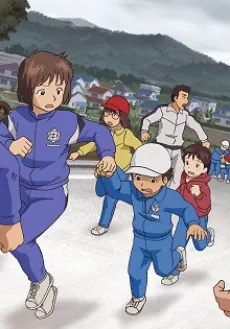
A single hour about a woman trapped between her disability and a community that won't let her forget she's buraku. The film doesn't need movement or spectacle to break you, it works in stillness, in the weight of things nobody says out loud. You watch her navigate a system designed to keep her small, and by the end you understand that survival itself is the quiet act of resistance. This one stays with you because it refuses to soften what it's showing you.
Inochi Kagayaku Akari is a single-episode educational drama released as an OVA. It aims to inform viewers about the difficulties women face, the prejudice directed at buraku communities, and the ways disability can leave people trapped. Rather than simple entertainment, the film uses drama to raise awareness of these social issues.