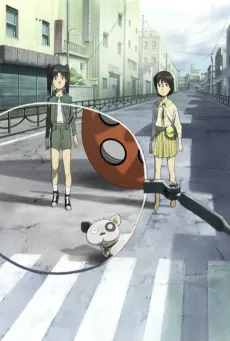
The ruins breathe. Kakurenbo doesn't build dread through exposition or jump scares, it suffocates you with cel-shaded decay and the certainty that something is already wrong before the game even starts. A boy searching for his sister enters a hide-and-seek that isn't a game at all, and the animation style makes every shadow, every blind, every corner of that dead city feel like it's watching him. In thirty minutes, it does what most horror films fail to do in two hours: it makes you feel the weight of something ancient that children keep feeding to by accident. The plot demands patience and a second watch, but the atmosphere is irreplaceable, proof that horror doesn't need runtime or character development when the world itself is the predator.
In an abandoned district of the old city, children whisper about Otokoyo, a hide-and-seek game they dare to play among the ruins. Everyone who has played it has disappeared, one by one, into the shadows between the buildings. A boy named Hikora joins the game to search for his missing sister, Sorincha. Players wear fox masks, and the game only starts once enough children have gathered. Rumor blames demons for the disappearances, and as the boy joins the others, the reason no one comes back begins to surface. Kakurenbo wraps psychological and supernatural horror around a deceptively simple childhood game.