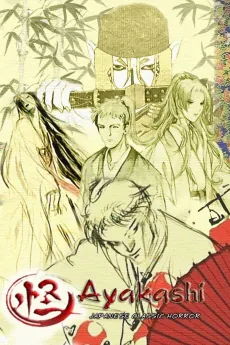
Momosuke thinks he's collecting ghost stories for a book. The Ongyou know better, every legend he finds is a real crime someone got away with, and they're using him to find it. Each tale peels back another layer of what people are capable of doing to each other when nobody's watching. The horror isn't the supernatural element; it's realizing the supernatural was never the point. A genuinely creepy show built on the principle that the worst things hide behind the most ordinary doors.
Momosuke abandons his work writing children's puzzles to pursue something darker: collecting stories of the supernatural for a book called One Hundred Tales. What begins as folklore research spirals into something far more sinister when he encounters the Ongyou, a cryptic group of investigators who hunt down the real people behind urban legends and folklore. They're not interested in myth or entertainment. They're after justice. As Momosuke chases stories alongside them, the line between curiosity and complicity blurs. Each tale unravels into something grotesque and morally complicated, forcing him to confront uncomfortable truths about human nature and the price of knowledge. This is psychological horror that treats urban legends as crime scenes. It thrives in atmosphere over jump scares, building dread through revelation rather than spectacle. If you're drawn to slow-burn horror that questions whether seeing the truth is worth the cost, this hits differently.
WHERE TO WATCH
Streaming Requiem from the Darkness legally, as of the last catalog refresh. Availability changes by region.
RetroCrushCrackleYouTube