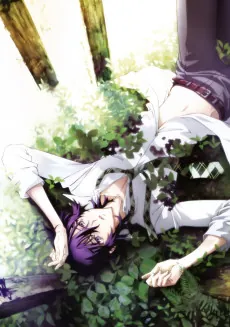
The Medicine Seller arrives to solve a problem that can't be solved with violence. Every spirit in feudal Japan is born from human desire so specific, so shameful, that it warps reality itself, and he can only unmask it by making someone admit what they've been hiding. The animation doesn't just support this, it becomes the horror: shapes bleed into watercolor, faces fragment, environments shift until you're watching something beautiful and nauseating at once, trapped in the same fractured logic as the people the spirits are destroying. This is psychological horror that actually understands psychology, built for viewers who want to be disturbed by what people do to themselves, not by jump scares or gore. Rewatch it and the episodes hit harder because now you see the anguish beneath the masks the first time through.
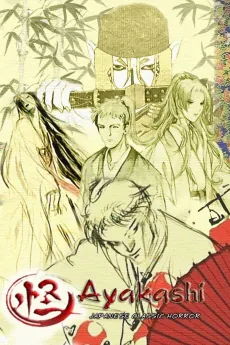
A mysterious Medicine Seller travels feudal Japan with his wits, a vast knowledge of the occult and a collection of peculiar tools, hunting malevolent spirits called Mononoke. But he won't simply exorcise these creatures. Instead, he methodically investigates each haunting to understand what he's truly facing. Defeating a Mononoke requires three things: discovering its form, uncovering the truth beneath its appearance, and grasping the reason for its behavior. Only then can he draw his Exorcism Sword, which makes the investigation itself a dangerous confrontation. The Medicine Seller works like a detective, relying on psychological insight and careful inquiry. One case brings him to an old inn where a pregnant woman named Shino is given the last free room, which turns out to be haunted by deadly spirits. The result is a spin-off of the Bakeneko arc of Ayakashi: Japanese Classic Horror, a psychological horror mystery built on the supernatural.
WHERE TO WATCH
Streaming Mononoke legally, as of the last catalog refresh. Availability changes by region.
CrunchyrollNetflixTubi TVBilibili TVOceanVeil