The premise sounds like a game, but it's a trap. Karada Sagashi uses the body-hunt mechanic to make you complicit in the horror, forcing you to witness what you're searching for piece by piece. By the time you realize the real cost of solving the puzzle, the show has already made you feel what the trapped girl feels. This is horror that works through guilt, not jump scares. The loop structure means nothing stays solved, and that's the point, some harms can't be undone just because you understand them.
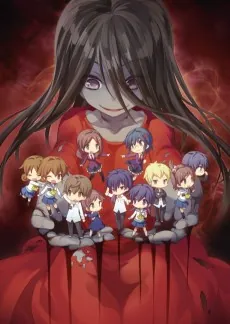
A girl appears before Asuka and asks her to search for her body. In the middle of the night, Asuka and her friends must comb their school for the eight scattered parts of that body. If they fail to recover all of it, a red figure keeps killing them and November 9th begins again. As the day loops, a question hangs over the hunt: who is the red person? A horror mystery ONA running ten episodes.