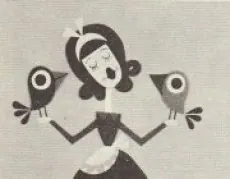
Nobody talks about this one. A single lost music video from 1970s Japanese children's television, buried so deep that most people don't know it existed at all, yet the song itself carries enough weight that collectors still hunt for footage decades later. The Peggy Hayama recording is pristine, the kind of vocal performance that makes you understand why certain artists define an era. What remains is a ghost of something that probably moved children who watched it once and never saw it again. That's the real story: a perfect artifact from a time when public broadcasting treated children's music like it mattered, now scattered across archives and private collections. If you find it, you're holding proof that something genuinely beautiful existed, even if nobody remembers seeing it.
Kigutsu wo Haite is a single-episode music piece set to the song of the same name, sung by Peggy Hayama together with the Nishirokugo Shounen Shoujo Gasshoudan. The video was broadcast as part of Minna no Uta, the NHK song program. It is now regarded as lost media, so no copy of it is known to be available to watch.