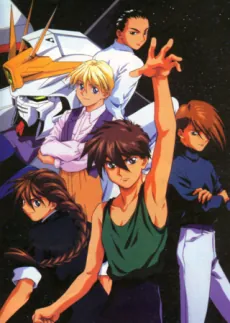
The five Gundams land on Earth as five separate answers to the same impossible question: how do you fight a war you didn't start and can't win cleanly? Each pilot carries a different weight, a different justification, a different breaking point. By the time you realize the show isn't really about which side deserves to win, you're already emotionally committed to five teenage boys who were built to be weapons and are trying desperately not to become them. The pacing stumbles in the middle stretch, sacrificing momentum for philosophical circling. What saves it is that the pilots never stop feeling real to each other, even when their ideologies contradict, even when they're enemies. Gundam Wing understands that the true cost of war isn't strategic defeat, it's becoming someone you don't recognize in the mirror.
Humanity has spread into space, where colonies known as Sides orbit the planet under the harsh rule of the United Earth Sphere Alliance and its sub organization OZ. After the colonies' leader is assassinated for opposing that rule, embittered rebels launch Operation Meteor in the year After Colony 195, sending five Gundams built from nearly indestructible Gundanium Alloy down to Earth, each piloted by a young man. One pilot, who has taken the slain leader's name, Heero Yuy, crashes into the ocean after battling OZ ace Zechs Marquise. Relena Peacecraft, daughter of a peace-seeking politician, sees him fall and finds him on the shore, a meeting that will shape both their lives and the fate of Earth and the colonies. The Mecha and Sci-Fi action carries a strong dramatic streak.
WHERE TO WATCH
Streaming Mobile Suit Gundam Wing legally, as of the last catalog refresh. Availability changes by region.
CrunchyrollHuluYouTube