This show trusts you to sit in ambiguity for thirteen hours straight. It builds a mystery so layered that solving one crime just reveals how little you understand the architecture beneath it, and the dialogue moves at the speed of obsession, not plot convenience. The severed limbs in boxes are almost beside the point, because what actually haunts you is watching intelligent people circle the same questions from different angles and never quite arrive at the same answer. It's Oshii-level patient, Murakami-level oblique, and designed for viewers who think mysteries should unsettle you more than they satisfy you. The pacing will lose half the audience by episode three. That's not a weakness. That's the show working exactly as intended.
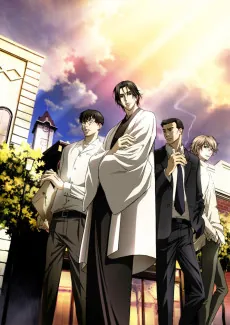
Between August and October 1952, a string of strange crimes shakes Musashino and Mitaka. Fourteen-year-old Kanako Yuzuki survives an attempt on her life, only to be taken from the odd, box-shaped research hospital where she is recovering. Other girls go missing next, and their severed limbs turn up in custom-made boxes left in nearby towns. News editor Morihiko Toriguchi and crime novelist Tatsumi Sekiguchi look into the case with help from the onmyōji Akihiko Chūzenji. Tokyo detective Shutaro Kiba keeps hunting for Kanako even though the case falls under Kanagawa police jurisdiction, while private investigator Reijiro Enokizu is hired by the lawyer for her grandfather's estate to find her as well. As their inquiries go deeper, they turn up bizarre truths and dark secrets hidden within the Yuzuki family, including Kanako's sister Youko, a famous actress. Adapted from a novel by Natsuhiko Kyougoku, the thirteen episodes weave mystery and thriller with a supernatural edge.