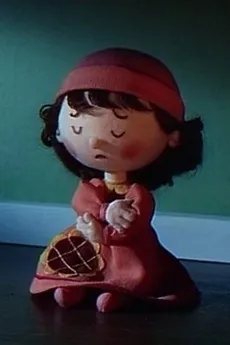
Two border patrol officers stand in the cold on opposite sides of a line that doesn't actually divide them. Stop-motion makes every gesture count; puppet faces don't lie, and neither do the silences between them. The camera sits close enough that you feel the weight of a job that consists entirely of saying no to people you recognize in yourself. This is a film about proximity and distance happening in the same frame. It costs nothing to watch two people fail at staying professional with each other. By the end, you understand why some borders exist to protect us from ourselves.
Two soldiers guard the border between their countries: one is an older man from a large nation, the other a young man from a small one. Blooming wild roses draw them together, and a relationship grows between the two. War soon separates them, and one of them becomes a casualty. This short drama is told through stop-motion puppet animation and adapts a story by Ogawa Mimei.