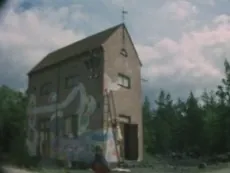
Stone is a handmade argument against everything animation has become. Aihara Nobuhiro stops the world with paper and clay, then photographs it back to life in real locations, no render farms, no polish, no distance between the artist's hand and your eye. The landscapes aren't just backgrounds; they're collaborators, textures that remind you animation was always meant to be tactile. This is what happens when someone refuses to separate drawing from the actual world. If you've ever felt animation slip into pure technical proficiency and wondered where the weight went, Stone has it.
Stone is an independent stop motion film made by Aihara Nobuhiro. The film mixes hand-drawn imagery with footage of real landscapes, placing drawn elements against actual scenery through frame-by-frame animation. The result is a work built on the meeting of the drawn and the photographed world.


