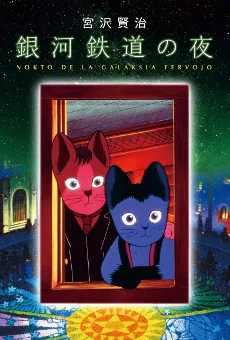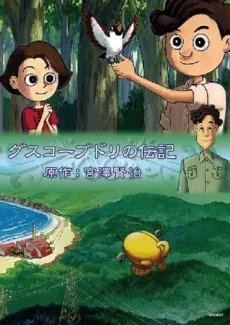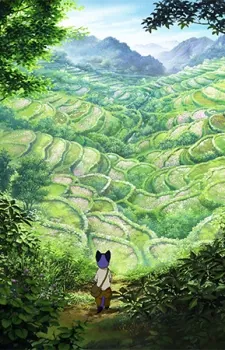
This one doesn't grab you, it dissolves you. Gisaburo Sugii adapts Kenji Miyazawa and does the thing he did with Night on the Galactic Railroad, drawing everyone as soft-faced cats so the grief lands sideways, and then he lets the famine in the Tohoku woods do its slow work: the parents walking into the forest promising to come back, Neri gone, Budori alone with the trees. The dream passages are where it detonates, layered collage and kaleidoscope textures and insect light that stop pretending to be a plot at all, scored like a lullaby you half remember. Budori himself is placid to the point of blankness, closer to a vessel than a boy, and if you need a protagonist with wants this will feel like watching weather. But that's the design. It ends with a farm kid deciding the harvest matters more than he does, at a volcano, in silence, and nobody claps.
In the forests of 1920s Tohoku in northeastern Japan, young Budori Gusuko sees his home ruined by a string of droughts and other natural disasters. Forced to leave, he sets out to find a better life somewhere else. He ends up joining a group of scientists at the Ihatov Volcano Department, whose work concerns the same kind of disasters that drove him away. Adapted from a classic story by Miyazawa Kenji, the film is a fantasy drama told as a fairy tale, with a slice-of-life focus on one young man's search for a new place in the world.
WHERE TO WATCH
Streaming The Life of Budori Gusuko legally, as of the last catalog refresh. Availability changes by region.
HIDIVE