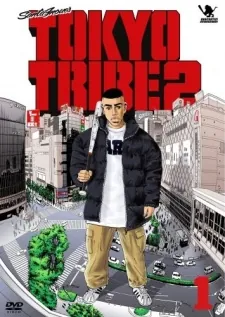
This one drags you through Tokyo by the collar and never bothers to explain the map. Santa Inoue's street art bleeds straight into the frame, all fat lines and graffiti-loud color, and Madhouse scores it like a mixtape instead of an anime OST, so every turf line between Musashino Saru, Wu-Ronz and the Shinjuku Hands lands as rhythm before it lands as plot. The violence is not stylized cool, it is ugly and personal, and Buppa exists purely to remind you how grotesque power gets when nobody can touch it. Mera's grudge against Kai is petty and ancient in the way real neighborhood grudges are, which is exactly why the body count feels so pointless and so inevitable. Tera trying to hold his crew together while the city sharpens itself is the quiet tragedy underneath all the noise. Thirteen episodes, no cleanup crew, no lesson learned.
In an alternate Tokyo, a version of the city seen in a different light, several tribes make their home. SARU belongs to Musashino, WU-RONZE to Bukuro, and HANDS to Shindyuku, stylized takes on real Japanese districts. The story portrays the young men of these streets, living in the city's seedy underside, where corruption is simply part of everyday reality. Thirteen episodes of action and drama.