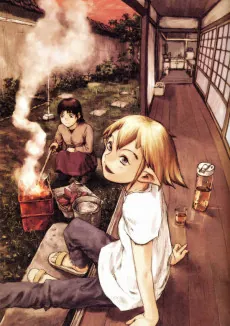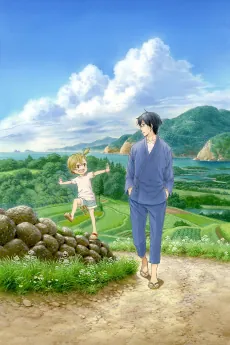
Two episodes of pure watercolor breathing. Alpha's flooded world moves at the speed of tea cooling in a cup, and every frame is a painting you'd hang on a wall. This isn't about plot, it's about standing still long enough to notice how light falls on an empty cafe, how an old man's silence says more than dialogue ever could. The animation is hand-drawn in a way most shows abandoned decades ago. You watch this when you need to remember that stories don't need to go anywhere to matter.
Alpha tends a lonely cafe on the edge of a future Yokohama where the sea has swallowed most of the land and old roads lie buried under sand or water. She is an android, keeping the shop running while her owner is away for an unknown length of time, and she hardly ever sees a customer. She does not mind, since the old man who runs the gas stand down the road drops by now and then, along with his grandson Takahiro. One day a courier android, Kokone Takatsu, delivers a package from Alpha's owner: a camera, so Alpha can take photos to look back on. There's no grand conflict here, just the gentle rhythm of life continuing in a world where humanity is quietly fading after a disaster. The two episodes are slow, calm science fiction, more interested in peaceful moments than in spectacle.