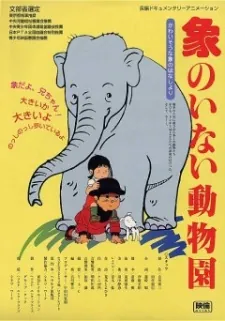
A man writes a bedtime story for his daughter about the animals starved during wartime, then she watches history correct itself when an elephant arrives as a gift from India. The movie sits with that contradiction, never explaining it away. You're watching a real father turn his daughter's confusion into something that heals without pretending the hurt didn't happen.
Adapted from a children's book Ren Saito wrote for his daughter and drawn from real events, the film is a drama set after the war. Hide promises his gravely ill sister Miyoko that he will find a way for her to see a real elephant. When he visits the zoo in search of one, an old man tells him about the terrible day the animals there were killed. During World War II, Tokyo's Ueno Zoo put down its dangerous animals for fear that Allied air raids might set them loose. The children later witness the arrival of Indira, an elephant sent as a gift from India's prime minister in 1949.