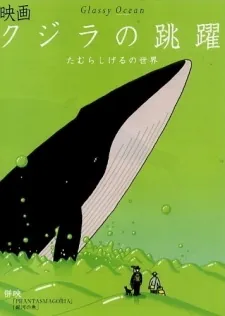
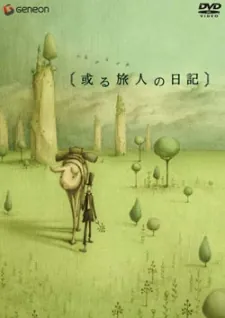
A Piece of Phantasmagoria doesn't build toward anything. It sits with you in the quiet after the wonder passes, the way a dream does when you wake up halfway through and can't quite remember why it mattered. Each episode is a crystal you hold up to the light, a snowman walking toward warmth he'll never reach, a lightbulb waiting centuries to turn on, a technician whispering to stars that aren't listening. The show moves at the speed of someone remembering, not someone explaining. Tamura's illustrations and Teshikai's ambient drift make every small moment feel like the most important thing that ever happened on a planet nobody knows exists. You don't watch this for plot. You watch it because sometimes the most honest art is the kind that costs nothing to make but costs everything to sit through.
On a small planet called Phantasmagoria, found while wandering the realm of dreams, everyday magic unfolds in fragments. Across fifteen short OVA episodes, the stories visit life on a glassy ocean, a snowman heading south, and the day a giant lightbulb at last begins to glow. A planetarium technician makes confessions, experiments aim to lift an artificial moon into the sky, and rumors circulate about a great meteor. Tamura Shigeru's fantastical artwork is joined by the ambient music of Teshikai Utollo, giving these gentle fantasy and science fiction vignettes a relaxed, quiet mood.