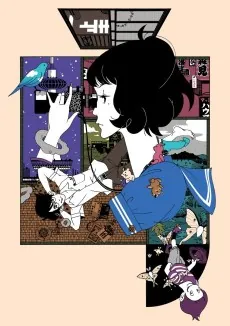
A girl runs through a dark alley. A thing chases her. That's the entire premise, and the film burns it down to nothing but pure survival instinct, no dialogue, no explanation, no mercy. The claymation moves with a weight that CGI still hasn't figured out, every frame feels like it costs something to make it move. By the time it ends, you understand why restraint is more terrifying than spectacle; a chase that refuses to cut away or look away or let you breathe hits harder than anything with a bigger budget.
A little girl wanders the streets late at night, and something feels deeply off. Without warning, a savage red monster appears and starts hunting her. As she runs for her life, she comes across an elderly homeless man in an alley and, later, a policeman with a gun, and each of them tries to protect her. Whether either can stop the creature on her trail is the question behind this single-episode ONA, a short piece of supernatural horror with psychological and thriller elements.