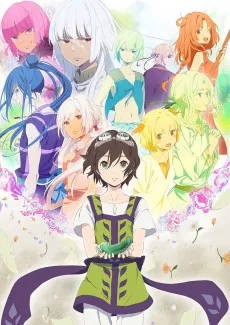
The world is so specific, so carefully built, that you stop questioning the sand ocean and start grieving it. Every character on the Mud Whale carries a death sentence written into their blood, and the show treats that not as a plot mechanic but as the weight they actually carry, quiet, daily, impossible to escape. The pacing collapses under its own ambition in the second half, and some of the character work feels thin. But if you're the kind of person who breaks when a show commits fully to its own sadness, this one gets under your skin and stays there.
Chakuro serves as the young archivist of the Mud Whale, an island that drifts across an endless sea of sand, recording each new island it passes. Most of its people bear saimia, powers that come at the price of an early death. Every island found so far has stood empty, and no one aboard has ever met a human from anywhere else. When a new island appears for the first time in six months, Chakuro and his friends join the scouting party. Among the ruins of an ancient civilization he finds a girl whose arrival will change his destiny and the world of the Mud Whale. The story blends adventure, fantasy, mystery and romance with questions of community and mortality.
WHERE TO WATCH
Streaming Children of the Whales legally, as of the last catalog refresh. Availability changes by region.
Netflix