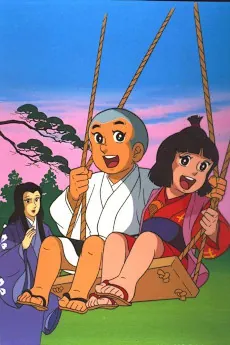
Nobody expects much from a loose adaptation of a children's anime from the 70s. This film proves that expectation wrong by finding something genuinely funny in watching a wise monk navigate absurd situations with perfect deadpan calm. The humor comes from restraint, not noise, a character who has already figured everything out, watching everyone else panic around him. It's comedy built on patience instead of punchlines. You're not laughing at jokes; you're laughing at the gap between what Ikkyuu knows and what everyone else is frantically trying to understand.
A mischievous young Buddhist monk named Ikkyuu navigates temple life with a sharp wit and sharper mind, constantly outsmarting the rigid adults around him while wreaking gentle chaos on religious ceremony and protocol. Set in historical Japan, the story finds humor in the gap between spiritual discipline and youthful rebellion, as Ikkyuu uses cleverness and humor to challenge authority figures who take themselves far too seriously. What drives the narrative is Ikkyuu's relentless questioning of why things must be done a certain way, backed by logic that leaves pompous monks scrambling for answers. He bends rules without breaking them, finding loopholes in doctrine that make his superiors look foolish while keeping audiences laughing at his audacious schemes. The tone balances slapstick comedy with genuine warmth. Ikkyuu never punches down, instead targeting hypocrisy and pretension among those who should know better. His antics come from a place of sincere curiosity rather than malice, making him endearing even when he's causing trouble. This adaptation captures the charm of mischief motivated by intelligence: watching a clever kid run intellectual circles around authority appeals to anyone who's ever felt constrained by arbitrary rules.