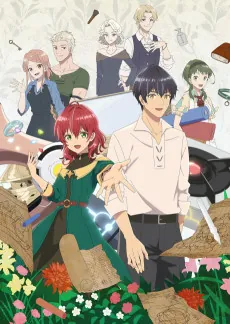
Dahlia doesn't need saving, she needs her own workshop, and the show is just her building it. The magic system here isn't spectacle, it's intimacy: you watch her craft wands the way another show would choreograph a fight scene, and somehow that becomes more satisfying than any explosion. By the final episode the animation's running on fumes, but Dahlia's already moved on from needing anyone else's validation, so you do too.
Dahlia works herself to death in Japan and is reborn into a world full of magic. Raised by her father Carlo, a respected maker of magical tools, she grows to love the craft and puts memories of her past life to use in practical inventions. As an adult she is engaged to her father's apprentice, but Carlo dies suddenly, and on the eve of the wedding her fiancé tells her he loves someone else. Left on her own, Dahlia decides to live for herself and commit fully to toolmaking. With help from old and new allies, she faces the road ahead, from a chance meeting with a knight to starting her own company, in this fantasy romantic comedy.
WHERE TO WATCH
Streaming Dahlia in Bloom: Crafting a Fresh Start with Magical Tools legally, as of the last catalog refresh. Availability changes by region.
Crunchyroll