Mafuyu's guitar sits broken in his apartment because he hasn't touched it since his boyfriend died. The show doesn't explain this for three episodes. When it finally does, you understand why a kid with a dead weight in his chest needs someone else to teach him how to make sound again. The romance isn't a subplot or a reward, it's the only thing that fixes him, and the show trusts you to feel the difference between watching someone fall in love and watching someone come back to life. The band's music matters because these four people are learning to play together after they've already learned to survive alone.
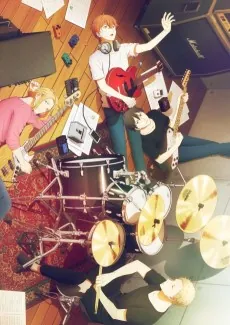
Mafuyu Satou carries a Gibson guitar he cannot play, and how it came to be his remains a mystery. When guitarist Ritsuka Uenoyama finds him napping on the gymnasium stairs and scolds him for letting the strings rust and snap, something shifts. Mafuyu begs Ritsuka to repair it and teach him, and Ritsuka eventually agrees, bringing him along to a jam session with bassist Haruki Nakayama and drummer Akihiko Kaji. Mafuyu's singing turns out to be strikingly beautiful, and Ritsuka, who had been losing his passion for music, becomes determined to make him the band's lead vocalist. Mafuyu hesitates at first but accepts after an emotional reunion with an old friend. Now he must learn the guitar while facing the circumstances behind it, as the distance between him and Ritsuka slowly changes in this music drama and romance.
WHERE TO WATCH
Streaming given legally, as of the last catalog refresh. Availability changes by region.
Crunchyroll