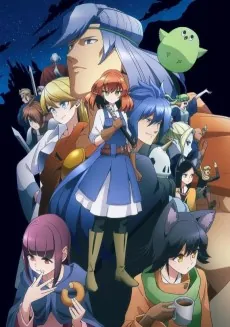
It spends two episodes convincing you it's a dumb gag show about a jobless hero, then quietly pulls the floor out. Leo Demonhart doesn't train the Four Ferocious Beasts by out-muscling them, he does it by seeing exactly what each one is starving for: Lily's need to be feared instead of pitied, Melnes' knife-behind-the-back distrust, Edvard's brittle pride, Echidna's habit of hiding command behind coils and jokes. Then the flashbacks land and you realize every smile Leo wore in episode one was scar tissue, and that humanity didn't exile a hero, it exiled the thing it built and couldn't look at. The animation is workmanlike and the comedy beats are broad, and none of it matters once the voice work starts doing the heavy lifting in the back half. Watch what Leo chooses when the human army finally comes for him. That's the whole show.
Leo Demonheart saved the world from the demon army, and nobody is grateful about it. The humans he protected fear his immense power and worry it could one day bring about their ruin, so they drive him out of the kingdom. After drifting for a while, he hears that Demon Queen Echidna is trying to rebuild her forces and returns to her castle to offer his services. Echidna turns him down flat, but her four generals agree to let him work for them quietly. Disguised as a masked dark knight called Onyx, Leo uses his strength to fix the army's many troubles, from crushing workloads to money problems, one at a time. Behind it all, he wants to find out why Echidna started the war. The result is a fantasy action comedy about a hero working for the side he beat.
WHERE TO WATCH
Streaming I'm Quitting Heroing legally, as of the last catalog refresh. Availability changes by region.
NetflixHuluHIDIVEYouTubeBilibili TViQ