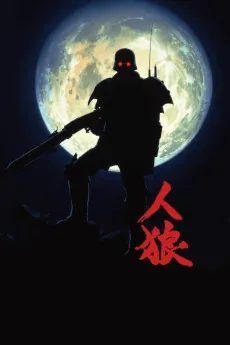
A constable watches a girl die in the sewers and chooses mercy over orders, then spends the rest of the film understanding why that choice destroys everything. Jin-Roh doesn't explain its politics or philosophy, it shows them through animation so precise, so deliberately composed, that silence becomes heavier than dialogue ever could. The Little Red Riding Hood parallels aren't decoration; they're the skeleton of a story about how institutions turn men into wolves, and how one moment of human weakness becomes the proof that the wolf was always there.
A militarized Tokyo suffocates under authoritarian control while underground resistance cells push back against the regime's grip. Constable Fuse serves the Capital Police's elite Special Unit until a chance encounter in the city's sewers changes everything. A young girl crosses his path during a raid, and his failure to shoot as ordered costs him dearly. With his competence in doubt, Fuse is put on trial and sent for reconditioning. He becomes caught between the brutal machinery of state power that shaped him and his friendship with the dead girl's sister. The girl haunts his dreams, and reality itself grows unreliable. Government conspiracy closes in around him, and some very powerful men now see him as a target. As his world collapses, Fuse is pushed again and again to decide what is real and what is right, and in the end which side of the line between human and beast he belongs on.
WHERE TO WATCH
Streaming Jin-Roh: The Wolf Brigade legally, as of the last catalog refresh. Availability changes by region.
CrunchyrollTubi TV