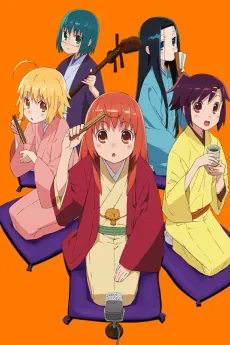
The entire show is five girls riffing on absurdity while supposedly teaching you about rakugo, except the rakugo is almost beside the point, the comedy is in the tangents, the kanji jokes that only work in Japanese, the casual fourth wall breaks that feel like you're eavesdropping on friends who have no idea what they're talking about. The punchlines don't always land if you're not fluent in cultural references, which is the cost of entry here. What makes it stick is that the five of them have actual chemistry; their banter feels effortless in a way most comedies spend entire seasons trying to fake.
Five young women who perform rakugo, the Japanese art of comic storytelling, spend their days chatting about whatever crosses their minds, either backstage at the theater or at well-known spots around Tokyo. Energetic, immature Marii, deceptively sweet Kigurumi, fortunate and easygoing Tetora, calm but violent Gankyou and gloomy, unstable Kukuru each pull the talk in a new direction. Their satirical banter ranges from trivial daily observations to politics and manga, and a conversation rarely ends anywhere near where it started. A mysterious friend in a wrestling mask also hangs around. The show is a comedy and slice-of-life series adapted from the manga by Kouji Kumeta and Yasu.