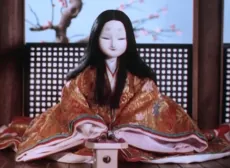
A sewing dummy comes alive for ninety seconds, and in that time it becomes something closer to a meditation on transformation than a narrative. The animation strips away its white exterior one layer at a time, each color underneath a small revelation, each movement deliberate enough that you feel the weight of the gesture. This is what Studio Ghibli does when it stops telling a story and just shows you something. It costs almost nothing to watch, and it stays with you longer than films ten times its length.
Kareinaru Budoukai is a short fantasy film made for the Ghibli Museum in Mitaka, where it screens as part of the museum's Film Guru Guru collection of animated shorts. A sewing dummy starts to spin by itself. As it rotates, its white dress opens up to show several layers of color beneath, before the figure settles back into stillness.