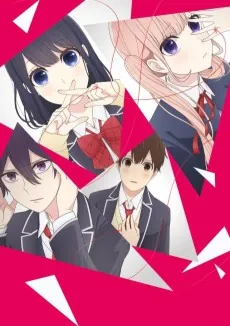
Jun spends the entire series choosing between two versions of the same person, except they're not, they're twins who've weaponized their differences into a love triangle that doesn't resolve because it can't. The show understands that sometimes "I like both of them" isn't indecision, it's the actual problem. What makes this work is that Rumi and Naori aren't interchangeable girl options; they're two different answers to the same question, and Jun has to live with knowing he can only pick one. The pacing stumbles when it tries to manufacture drama instead of letting the emotional weight of that choice speak for itself, but in the moments where it lands, you feel exactly what Jun feels: the paralysis of wanting two incompatible futures.
Jun Shirasaki has grown up next door to the Jinguji twins, his childhood friends, and the two sisters could hardly be more different. Rumi, the older twin, comes across as boyish but has a maiden's heart. Naori looks cute and girlish and loves otaku culture. Rumi was Jun's first girlfriend, but when she breaks up with him she says something that tangles up the relationship among the three of them, along with their first loves. What follows is a romance about a love triangle playing out between neighbors, with growing feelings and mounting confusion.
WHERE TO WATCH
Streaming Love Is Indivisible by Twins legally, as of the last catalog refresh. Availability changes by region.
Crunchyroll