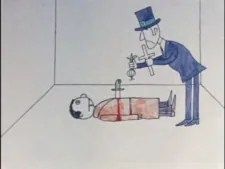
Anime Like Murder
Satsujin MURDER
殺人MURDER
MOVIE · 1 eps · 10 min/ep · PG-13 - Teens 13 or older
AniList 47/100 · MAL 5.14/10 · Ranked #14,316 · 2,638 members
Mystery
A single murder told five different ways, each detective seeing a completely different crime. The joke isn't that one version is right, it's that the genre itself is a lie we keep believing. Made in 1964 by someone who understood that animation could be a thinking tool, not just spectacle.
A man has been murdered, and a whole lineup of investigators steps in to crack the case. A classic private eye, a computer scientist and even a figure modeled on James Bond each set out to solve the crime and identify the killer. Makoto Wada, a versatile artist, made this short animated mystery, and Masao Yagi wrote the music. In 1964 it received the third Oofuji Noburou Award at the Mainichi Film Awards.
TAGS
ParodyVampireGuns
// WATCH.NEXT
IF YOU LOVED MURDER, WATCH THESE NEXT




not sure what you're in the mood for? browse 40 house lineups.


