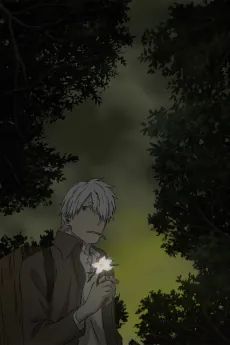
Ginko walks into a village where the sun stopped rising, and you realize this isn't about solving a problem, it's about listening to what the land is trying to say. The twin girls at the heart of it aren't victims waiting to be saved; they're part of something larger, quieter, stranger than rescue narratives allow. Yuki Kajiura's score doesn't underscore the mystery, it becomes the mystery, each note a question the show trusts you to sit with.
A rare solar eclipse stops the whole countryside at midday, and rumor holds that it lets ordinary people see mushi. Acting on a prediction from the record keeper Tanyuu Karibusa, the mushi expert Ginko arrives at a luckless farming village. Once the eclipse passes, a strange black cloud forms and hides the sun again, leaving one area in darkness. Ginko suspects a mushi called Hihami and works to bring back the light before the crops die. The answer appears tied to twin girls living nearby, yet not every villager is keen to see the sun return. This one-episode special mixes mystery, fantasy and quiet supernatural slice of life.
WHERE TO WATCH
Streaming MUSHI-SHI OVA legally, as of the last catalog refresh. Availability changes by region.
Crunchyroll