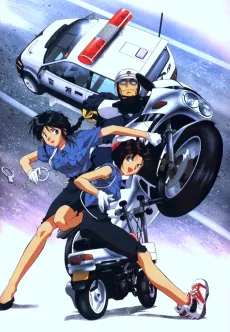
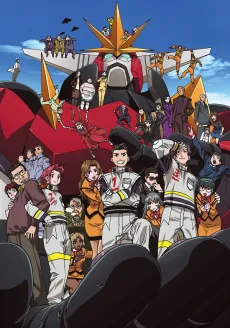
You're watching a show about giant robots that mostly stand around the office complaining about paperwork, their love lives, and whether the vending machine is broken. The actual police work happens between the jokes, treated with the same tired mundanity as any other job. When the mecha finally move, it's because someone has to stop a giant forklift from crashing into a building, not because the fate of humanity hangs in the balance. This is a comedy that respects its premise enough to let the robots be heavy, expensive equipment that breaks down and costs money to repair. Real fans of this show came for the giant robots and stayed for Natsumi's terrible driving and Goto's exhausted sighs. Nothing else on TV will let you laugh at a labor unit getting stuck in traffic for four minutes straight.
In the future, heavy robots called labors work in construction, firefighting, the military and other fields. The machines are only tools, and some of the people operating them turn to crime. Because a labor can do serious damage in the wrong hands, the police answer with patrol labors of their own, known as patlabors. The Second Special Vehicles Division is a mismatched group of officers who pilot these units, working hard to stop crime while trying to keep ordinary lives. The series mixes comedy with mecha science fiction.