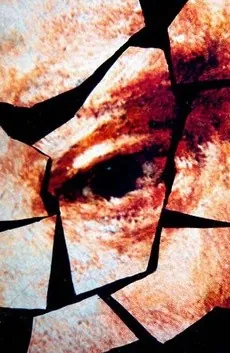
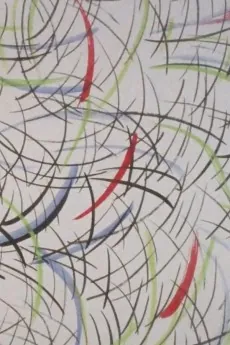
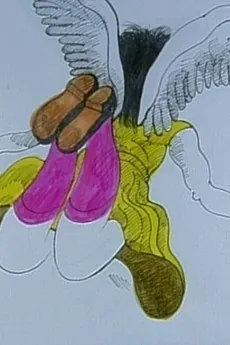
Keichi Tanaamis assembles 80 painted scenes into a film that refuses to stay in one order, each frame complete enough to stand alone. You're not watching a story unfold so much as moving through a gallery where every path changes what you see. The animation exists first, the narrative second, a radical inversion that rewards rewatching because a different arrangement isn't just a novelty, it's a different film entirely.
Red Shade is a visual experience without conventional narrative structure. Eighty distinct scenes, each a painting by Keiichi Tanaami made with animation in mind and then given its own motion, make up the work, and an edited arrangement of them became the first film. Each scene stands complete on its own, so the sequence can be reordered, from the last scene back to the first or in an irregular pattern, without changing the essence of the piece. Swapping images frame by frame can hit hard or leave a gentler, airy impression. The imagery blends childhood memories of World War II with the Western pop imagery that reached Japan during the postwar rebuilding years. It suits viewers drawn to experimental animation over plot-driven entertainment.