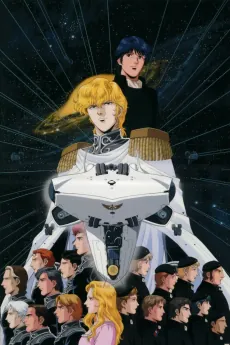
The first episode ends with humanity already losing. Kodai and Shima don't get a slow burn to heroism; they inherit a dead world that needs salvation in one year. The Yamato isn't a warship you're rooting for, it's the last argument Earth has left, and watching it cross the galaxy feels like watching the only candle in a dark room refuse to go out. The animation doesn't just serve the story; it makes every jump to lightspeed, every alien horizon, every moment of silence in the void feel like something that matters. You watch this show the same way Kodai fights: because stopping means extinction.
In 2199, humanity lives in underground cities, driven there by the Gamilas Empire's planet bombs, which have left Earth's surface an irradiated wasteland. Scientists give the species one year. Young officers Susumu Kodai and Daisuke Shima recover a mysterious capsule from a ship that made an emergency landing on Mars. It points to Iscandar, a planet beyond the Magellan Galaxy that offers the Cosmo Reverse System, a way to heal Earth. The Earth Defense Force puts its last resources into the Yamato, a new battleship driven by a Wave Motion Engine. Its crew ranges from newcomers like Kodai to seasoned officers like Captain Juuzou Okita, and together they must complete the 168,000 light-year voyage to Iscandar before time runs out. The result is action-driven, dramatic science fiction about a last-chance voyage.
WHERE TO WATCH
Streaming Star Blazers: Space Battleship Yamato 2199 legally, as of the last catalog refresh. Availability changes by region.
Crunchyroll