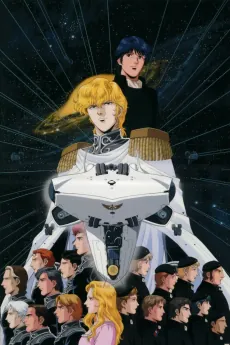
The show demands you care about people you thought you'd already said goodbye to. It uses that against you, threading a story about forbidden power and messianic delusion through a crew that's spent three years trying to be anything other than soldiers. Akira Miyagawa's soundtrack doesn't score the action, it amplifies the weight of coming back, of realizing you were never really done with this ship or each other. The philosophical questions about salvation and sacrifice hit because they're asked by characters with blood on their hands and nowhere else to go. Wave Motion technology becomes a metaphor made visible, beautiful and terrible in the same frame. By the end, you're not watching a space opera anymore; you're watching people choose to be broken together rather than whole apart.
Three years after the Yamato's return, Earth has rebuilt itself, but the recovery has come at a price. The forbidden Wave Motion technology now drives the planet's reconstruction, and Earth has made peace with the Gamilans while building up a powerful new defense fleet. When a psychic message from the mysterious Goddess Teresa reaches the scattered former crew of the Yamato, she urges them to return to their ship and travel to the distant planet Terezart. The former crew members reunite aboard their legendary battleship, drawn by Teresa's promise of a power able to stand against the Gatlantis Empire, which is closing in on Earth with hostile intent. Their new voyage across space will test their courage against an even greater foe.
WHERE TO WATCH
Streaming Star Blazers: Space Battleship Yamato 2202 legally, as of the last catalog refresh. Availability changes by region.
Crunchyroll