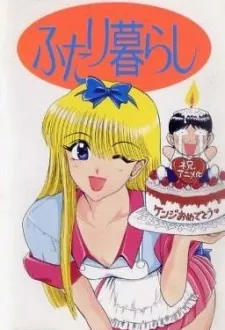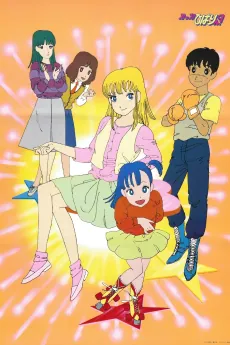
It drops you into 1983 and dares you to keep up: Kousaku is orphaned, shipped off to a yakuza boss's house, and the punchline of his new life is that the prettiest girl there, Hibari, is the boss's son and has decided Kousaku is hers. What keeps it alive forty years later is that Hibari is written with actual spine, confident, athletic, running circles around the school and around Kousaku's panic, while everyone else plays straight man to a joke she refuses to be. Hisashi Eguchi's linework survives the translation to cel, all clean silhouettes and that glossy early-80s pop styling that still looks better than shows made a decade after it. Be honest about the rest: the running gag is Kousaku's horror, and the supporting cast throws punches this era threw casually, so you watch it as a document, not a hug. And it just stops, no ending, same as the manga, which somehow fits a show about a kid who never gets an answer he can live with.
After his mother dies, Sakamoto Kousaku moves in with a family headed by one of her old friends, who once admired her. He soon discovers that the household belongs to the yakuza and includes four beautiful daughters. Kousaku falls for the blond middle sister, Hibari, at first sight, only to learn that Hibari is actually a boy dressed as a girl. Hibari is very interested in Kousaku, and Kousaku struggles to stay normal and fend off those advances, while Hibari's father, Ibari, tries to turn his son into a proper man. The result is a comedy about a hectic but happy life under one roof.