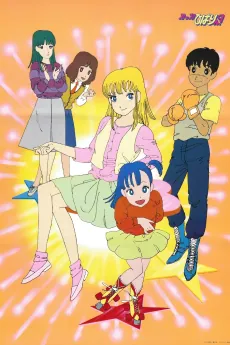
The joke lands before you even understand it's a joke. Kenji thinks he's living with a guy, Hikaru thinks she's a guy, the show thinks you're buying it for five seconds before the premise itself becomes the comedy engine. Every conversation is built on this collision of what everyone assumes versus what's actually happening. The romance doesn't sneak up on you because the show never hides it. The real pleasure is watching two people figure out who they actually are while pretending they already know. That takes more writing skill than most comedies from this era bothered with.
Kenji Aoyama is an aspiring manga artist who draws erotic work and is struggling to cover his rent. His friend's younger brother, Hikari Satou, steps in and offers to share the place as a roommate. There is a catch: the new housemate Kenji takes for a boy turns out to be a girl who was brought up as one. From there the short episodes follow Kenji and Hikari as they get tangled up with a series of women, played for comedy, romance and ecchi humor.