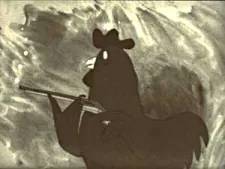
This one puts you in the position of squinting at a chicken and realizing it's you. Mushi Production made it in 1965, thirty-five years before Dreamworks put a hen in an escape movie, except here the poultry allegory isn't a caper, it's rulers and ruled grinding toward open war. It's quiet where you expect spectacle, more contemplative image-making than action, which is exactly why half the people who watch it come out swearing it's an unrecognized piece of political animation and the other half come out genuinely unsure what they just saw. The symbolism does not hold your hand and never explains its intent, so your read of it is your own problem. That divide is the point of watching: this is animation being used as argument before anyone in the mainstream considered that a legitimate use of the medium. Sit with it, then go find someone who hated it and see who's right.
A chicken stands at the center of an escalating conflict in this 1965 short film from Mushi Production. What begins as a rebellion of the ruled against their rulers grows step by step until it becomes a great war. Despite that scale, the film runs only three minutes. Through exaggeration and bold imagination, the short compresses the endless repetition of war across human history into that brief running time, turning a simple animal story into a compact statement about conflict.