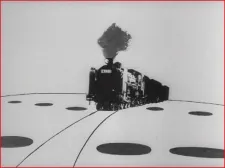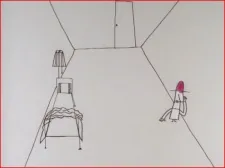
A man watches his neighbor. Nothing happens. Everything happens. Kuri builds a complete story from the smallest human gesture, the kind of observation that makes you realize how much character lives in a single glance or hesitation. The audio is rough and the drawings are deliberately plain, but that's exactly the point, strip away spectacle and you see what actually matters. By the end, you understand why someone would stand at a window watching a stranger, and the show has earned that understanding without a single dramatic moment.
A man living next door cannot get a quiet, restful night's sleep, because his neighbour keeps busy with one noisy pursuit after another: typing, playing musical instruments, and even building a space rocket. Pioneering animator Yoji Kuri made this short experimental comedy in 1965, and it is a single short film built around one sleepless man and the ever escalating racket from the other side of the wall.