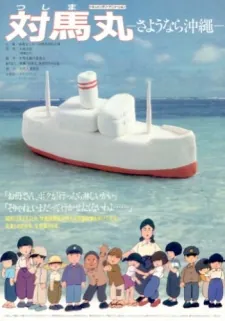
A submarine attack on a ship full of children. That is the entire premise, and the film never looks away. The deformed character designs force you to see them not as figures in a history textbook, but as specific children whose names are on a memorial, whose families survived to make this film so you would remember. This is not entertainment dressed up as historical record, it is testimony.
July 1944: a freight boat named Tsushima Maru is carrying a class of schoolchildren home when an American submarine attacks and sinks it. Adapted from Ooshiro Tatsuhiro's book of the same name, this 1982 animated film retells the real shipwreck in documentary style. Surviving family members connected to the Tsushima Maru produced it. The telling is meticulous and grounded, and Kiyomizu Kazutoshi's deformed character designs set that realism in sharp contrast, giving an account of a real wartime tragedy an unusual and striking look.