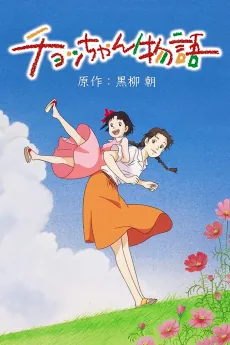
This one doesn't ambush you. It walks you gently through a marriage nobody wanted, poverty met with a shrug and a grin, three kids in a small house, and then it quietly removes the floor. Chocchan marries her violinist against both families, and the film's whole argument is that her stubborn cheerfulness is a form of courage, not naivety, right up until the war asks her to prove it. The animation carries almost all of it: no spectacle, no swelling set pieces, just faces, hands, rooms, and weather doing the emotional labor a lesser film would hand to dialogue. And the quiet gut-punch is that this actually happened, that one of those children grew up to be Tetsuko Kuroyanagi. Almost nobody talks about this movie. Everybody who finds it ends up sitting very still through the credits.
A woman named Cho, known as Chocchan, marries a violinist in the years before World War II, even though both of their families object to the match. The couple live in poverty and raise three children, yet they are happy together and meet every misfortune with a smile. Their contentment faces a new test when war breaks out and Chocchan's husband has to leave for the front. This feature-length drama draws on Cho Kuroyanagi's own semi-autobiographical account. She is better known as the mother of the actress Tetsuko Kuroyanagi. The result is a slice-of-life portrait of one family's everyday life in wartime Japan.